
Why Add a Carport to Your Home?
A well-designed carport offers more than just vehicle protection. It shields your car from harsh Australian sun, hail, and rain while adding street appeal and property value. Unlike a fully enclosed garage, carports provide excellent ventilation and are generally more cost-effective to build.
#
Melbourne's Hail Problem
If you've lived in Melbourne long enough, you know our weather can turn in minutes. The March 2010 hailstorm brought hailstones between 2-10cm across the city, leaving over 100,000 homes without power and causing widespread vehicle damage. Later that year, the November 2010 storm dropped golf-ball-sized hailstones causing hundreds of millions of dollars in damage.
These aren't freak events—Melbourne regularly experiences severe hailstorms, particularly during spring and summer. A quality carport isn't just about convenience; it's insurance against an expensive repair bill.
Benefits of installing a carport:
- Protects your vehicle's paint from UV damage and fading
- Reduces interior car temperatures in summer by up to 20°C
- Shields against hail damage (a major concern in Melbourne)
- Adds covered outdoor space for gatherings or projects
- Increases property value by 5-10% on average
- More affordable than building a full garage
- Faster construction with less disruption
Popular Carport Designs in Australia
#
Flat Roof Carports
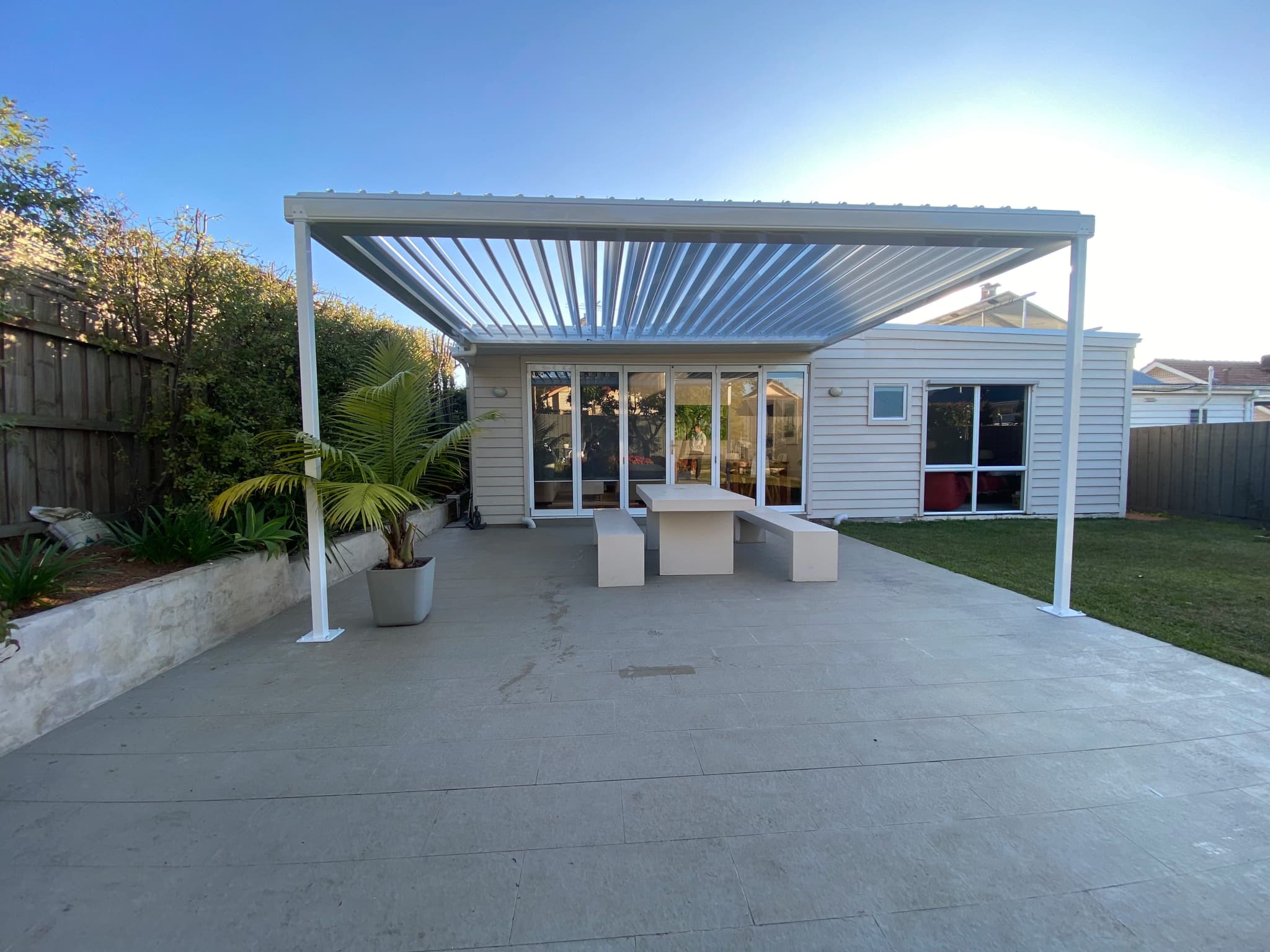
The modern flat roof carport is one of the most popular choices for contemporary Australian homes. With its clean lines and minimalist aesthetic, this design complements modern architecture beautifully.
Best for: Modern homes, properties with height restrictions, budget-conscious builds
Key benefits:
- Cost-effective construction
- Easy to integrate with existing rooflines
- Simple drainage solutions
- Works well as a carport attached to the side of house
#
Skillion Carport Designs
A skillion carport (also known as a lean-to or shed roof) features a single sloping surface. The modern skillion carport has become incredibly popular in Australia due to its contemporary look and practical design.
Best for: Homes with limited space, contemporary aesthetics, carports attached to house
Key benefits:
- Excellent water runoff
- Creates a sense of height and space
- Perfect for a skillion carport attached to house configurations
- Cost-effective single-slope construction
#
Gable Roof Carports
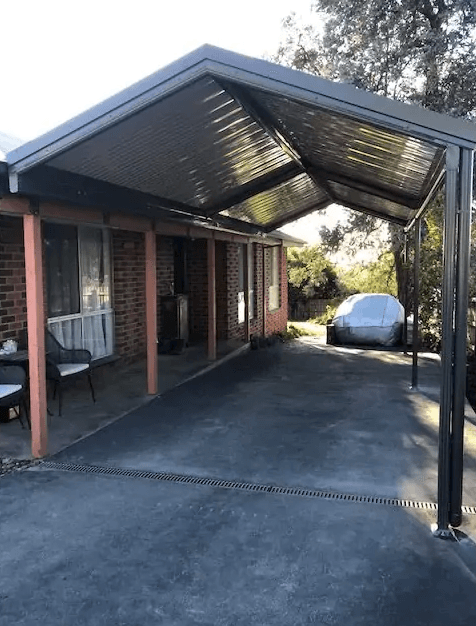
For those seeking a more traditional look, a gable roof carport attached to house designs offer timeless appeal. The pitched roof creates additional height and allows for better air circulation.
Best for: Traditional and federation-style homes, areas with heavy rainfall
Key benefits:
- Classic aesthetic that suits most home styles
- Superior drainage from the peaked design
- Can be designed to match your existing roof
- Additional headroom in the centre
#
Hip Roof Carports
A hip roof carport attached to house features slopes on all four sides, meeting at a ridge at the top. This elegant design offers excellent weather protection from all angles.
Best for: Properties exposed to wind, homes requiring 360-degree protection
Key benefits:
- Superior wind resistance
- Excellent drainage on all sides
- Sophisticated appearance
- Works well as a standalone or attached structure
#
Curved Roof Carports
For a distinctive architectural statement, curved roof carports offer a unique aesthetic that sets your property apart. These designs create visual interest while providing excellent coverage.
Best for: Contemporary homes, those wanting a unique design feature
Key benefits:
- Eye-catching architectural feature
- Efficient water runoff
- Modern aesthetic appeal
- Strong structural integrity
#
Dutch Gable Carports
A dutch gable combines elements of both gable and hip roof designs, featuring a small gable at the top of a hip roof. This creates an attractive, traditional appearance with excellent ventilation.
Best for: Heritage homes, properties in established suburbs
Key benefits:
- Adds character and visual interest
- Better ventilation than standard gable
- Suits period homes beautifully
- Can incorporate decorative elements
Carport Placement Options
#
Carport Attached to Side of House
One of the most popular configurations is a carport on the side of house. This placement maximises your front yard space while providing convenient access to your vehicle. A side carport integrates seamlessly with your home and can often be built under existing council guidelines. See our attached carport options for designs that connect directly to your home.
Advantages:
- Direct access to home (often near kitchen or laundry)
- Utilises otherwise unused side space
- Often doesn't require planning permits
- Can incorporate side entry door to house
- Check boundary setback requirements (typically 1m minimum)
- Ensure adequate width for car doors to open
- Consider neighbour's privacy and light access
Carport in Front of House
A carport front of house makes a design statement while providing immediate vehicle access. This placement works particularly well for corner blocks or properties with wide frontages.
Advantages:
- Maximum street presence
- Easy access for visitors
- Can incorporate portico-style entry
- Works well on sloping blocks
- Council regulations often stricter for front-facing structures
- Must complement home's facade
- May require landscape integration
Freestanding Carport Designs
Free standing carport ideas offer flexibility in placement and can accommodate multiple vehicles or additional storage. These structures can be positioned anywhere on your property, independent of your home's structure.
Advantages:
- Complete flexibility in positioning
- Can be larger without affecting house structure
- Ideal for boats, caravans, or multiple vehicles
- No impact on home's exterior walls
- Requires foundations/footings on all corners
- May need separate electrical connection
- Check maximum allowable height for your zone
Modern Carport Designs
Residential modern carport designs focus on clean lines, minimal ornamentation, and quality materials. Modern flat roof carports and contemporary skillion designs dominate this category.
Popular features include:
- Colorbond steel construction in Monument, Basalt, or Surfmist
- Integrated LED lighting strips
- Sleek 90mm or 100mm square posts
- Complementary colours to your home's facade
- Exposed rafters for industrial aesthetic
Double Carport Designs
A double carport attached to house accommodates two vehicles and offers flexibility for boat or caravan storage. These larger structures require careful planning to ensure they complement your home's proportions.
Standard double carport dimensions:
- Width: 5.5m to 6.5m
- Depth: 5.5m to 6m minimum
- Height: 2.4m to 3m (consider roof racks, 4WDs)
Carport Size Guide
Choosing the right size is crucial. Too small and you'll struggle with access; too large and it may overwhelm your property.
#
Single Carport Dimensions
| Vehicle Type | Minimum Width | Minimum Depth | Recommended |
| Small car (hatch) | 2.7m | 5.0m | 3.0m x 5.5m |
| Medium sedan | 2.9m | 5.5m | 3.2m x 6.0m |
| Large SUV/4WD | 3.2m | 5.5m | 3.5m x 6.0m |
| Ute with tray | 3.0m | 6.5m | 3.3m x 7.0m |
Double Carport Dimensions
| Configuration | Minimum Width | Minimum Depth | Recommended |
| Two small cars | 5.4m | 5.0m | 6.0m x 5.5m |
| Two large vehicles | 6.0m | 5.5m | 6.5m x 6.0m |
| Car + workspace | 5.5m | 6.0m | 6.0m x 6.5m |
- Standard: 2.4m (suits most sedans and small SUVs)
- Medium: 2.7m (accommodates roof racks, larger SUVs)
- High: 3.0m+ (required for caravans, boats, campervans)
Materials and Construction
#
Colorbond Steel
The most popular choice for carport designs in Australia, Colorbond steel offers:
- Durability in harsh conditions (25+ year lifespan)
- Wide colour range (22 standard colours)
- Low maintenance (occasional wash only)
- Fire resistance (BAL rating compliant options)
- Fully recyclable
- Monument (dark charcoal) – contemporary homes
- Basalt (dark grey) – modern and traditional
- Surfmist (off-white) – coastal and light-coloured homes
- Woodland Grey – blends with natural surroundings
- Classic Cream – heritage and period homes
Timber
For a natural aesthetic, timber carports provide warmth and character. They require more maintenance but create a beautiful architectural feature.
Best timber options:
- Treated pine (budget-friendly, requires staining)
- Merbau (naturally durable, rich colour)
- Spotted gum (Australian hardwood, very durable)
- Cypress (naturally termite resistant)
#
Aluminium
Lightweight and corrosion-resistant, aluminium is ideal for coastal properties or those seeking a maintenance-free option.
Benefits:
- Won't rust or corrode
- Lightweight (easier installation)
- Powder-coated colour options
- 100% recyclable
Carport vs Garage: Quick Comparison
Still weighing up a carport against a full garage? Our detailed carport vs garage comparison dives deeper into costs, benefits, and which suits Melbourne properties.
| Factor | Carport | Garage |
| Cost | $5,000-$20,000 | $20,000-$60,000+ |
| Build time | 1-3 days | 2-6 weeks |
| Council approval | Often exempt | Usually required |
| Security | Open (unless enclosed) | Fully secure |
| Ventilation | Excellent | Limited |
| Flexibility | High | Lower |
| Property value add | Moderate | Higher |
| Maintenance | Very low | Higher |
Council Regulations and Permits
#
Melbourne Metropolitan Area
Building permits typically NOT required if:
- Floor area under 10m² and not attached to dwelling
- Structure is open on all sides
- Maximum height under 3m
- Not in a heritage overlay zone
- Meets all setback requirements
- Floor area over 10m² (most carports)
- Attached to the dwelling
- Within heritage or special overlay zones
- Located in bushfire-prone areas
Tips for Smooth Approval
1. Contact your council's planning department early 2. Check if your property has any overlays 3. Discuss plans with neighbours (avoids objections) 4. Use a licensed builder familiar with local requirements 5. Consider engaging a permit consultant for complex projects
Cost Guide: What to Expect
#
Single Carport Costs (Installed)
| Type | Budget | Mid-Range | Premium |
| Flat roof | $3,500-$5,000 | $5,000-$8,000 | $8,000-$12,000 |
| Skillion | $4,000-$6,000 | $6,000-$9,000 | $9,000-$14,000 |
| Gable | $5,500-$7,500 | $7,500-$11,000 | $11,000-$18,000 |
Double Carport Costs (Installed)
| Type | Budget | Mid-Range | Premium |
| Flat roof | $6,000-$9,000 | $9,000-$14,000 | $14,000-$22,000 |
| Skillion | $7,000-$10,000 | $10,000-$16,000 | $16,000-$25,000 |
| Gable | $9,000-$13,000 | $13,000-$20,000 | $20,000-$35,000 |
What Affects Price?
- Size: Larger = more materials and labour
- Roof style: Gable and hip cost more than flat
- Materials: Steel vs timber vs aluminium
- Footings: Soil conditions, existing concrete
- Attachments: Connected to house vs freestanding
- Extras: Lighting, fans, enclosure panels
- Location: Access difficulty, site slope
Frequently Asked Questions
#
Do I need a permit for a carport in Melbourne?
Most carports over 10m² require a building permit. Planning permits may also be needed depending on your location and property overlays. Always check with your local council before starting.
#
How long does it take to build a carport?
A standard carport installation takes 1-3 days once materials arrive. However, allow 2-4 weeks for permits (if required) and 2-6 weeks for manufacturing of custom structures.
#
Will a carport protect my car from hail?
Absolutely—and given Melbourne's history of severe hailstorms, this is one of the best reasons to invest in a carport. A solid Colorbond roof will protect your vehicle from all but the most extreme hail events, potentially saving you thousands in panel repairs and insurance excess.
#
What size carport do I need for an SUV?
For a single SUV, we recommend minimum 3.2m wide x 5.5m deep. If you have roof racks or a larger 4WD, consider 3.5m x 6m with 2.7m height clearance.
#
How close to the boundary can I build a carport?
Typically 1m from side boundaries, but this varies by council. Some areas allow building to the boundary with neighbour consent. Always verify with your local council.
Getting Started
Ready to explore carport ideas for your home? At Undercover Concepts, we specialise in custom carport designs that enhance Melbourne properties. Our team can help you navigate council requirements, choose the right materials, and create a design that perfectly suits your home.
Our process: 1. Free on-site consultation and measure 2. Custom design to suit your home 3. Handle all permit applications 4. Professional installation by qualified tradespeople 5. Full warranty on materials and workmanship
View our carport building services or start your free design today for your carport project.