
Choosing Decking That Lasts
Your deck will face UV exposure, rain, heat, and foot traffic. The material you choose determines how it looks in 10 years-and how much work you'll put in along the way.
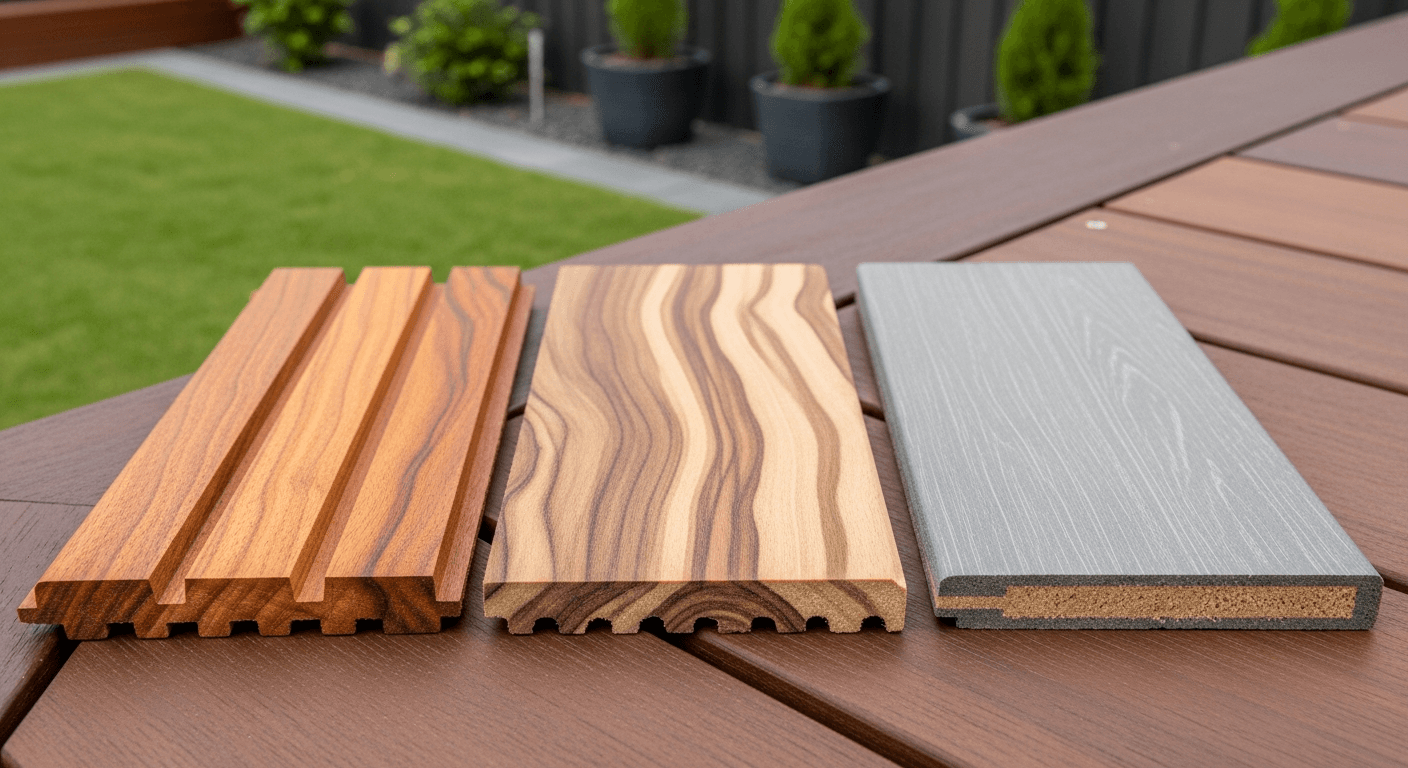
Option 1: Hardwood Timber
Species to consider: Merbau, Spotted Gum, Blackbutt, Jarrah
#
Pros:
- Natural beauty
- Warm underfoot
- Can be refinished
- Sustainable (if sourced responsibly)
Cons:
- Requires annual oiling/staining
- Can splinter, cup, or crack
- Fades without maintenance
- Termite risk (treated pine)
Option 2: Composite Decking
Brands to consider: Trex, Modwood, Eva-Last, NewTechWood
#
Pros:
- Low maintenance
- Won't splinter or crack
- Consistent colour
- Termite and rot proof
- 25-year warranties common
Cons:
- Higher upfront cost
- Can get hot in direct sun
- Limited repair options
- Looks "manufactured" to some
Option 3: Aluminium Decking
#
Pros:
- Virtually indestructible
- Zero maintenance
- Cool underfoot
- Won't burn (great for bushfire zones)
- Lifetime warranty
Cons:
- Highest cost
- Industrial aesthetic
- Noisy underfoot
- Limited colour options
Melbourne-Specific Considerations
#
UV Exposure
Melbourne's UV is intense. Timber fades quickly without protection. Composite with UV stabilisers handles this better.#
Temperature Swings
Extreme temperatures cause timber to expand and contract. Quality composite moves less.#
Wet Conditions
Melbourne's wet winters test drainage. Ensure any deck has proper fall and ventilation underneath.My Recommendation
For most homeowners, I now recommend quality composite decking. The slightly higher upfront cost pays off in zero maintenance and longer lifespan. Plus, modern composites look remarkably like real timber.
Once your deck is built, keep it looking new with our complete deck maintenance guide.
Get a decking quote with material options compared.